
The Requirements to Create a Valid Will in Indiana - And What You Might Be Missing in Your Estate Planning
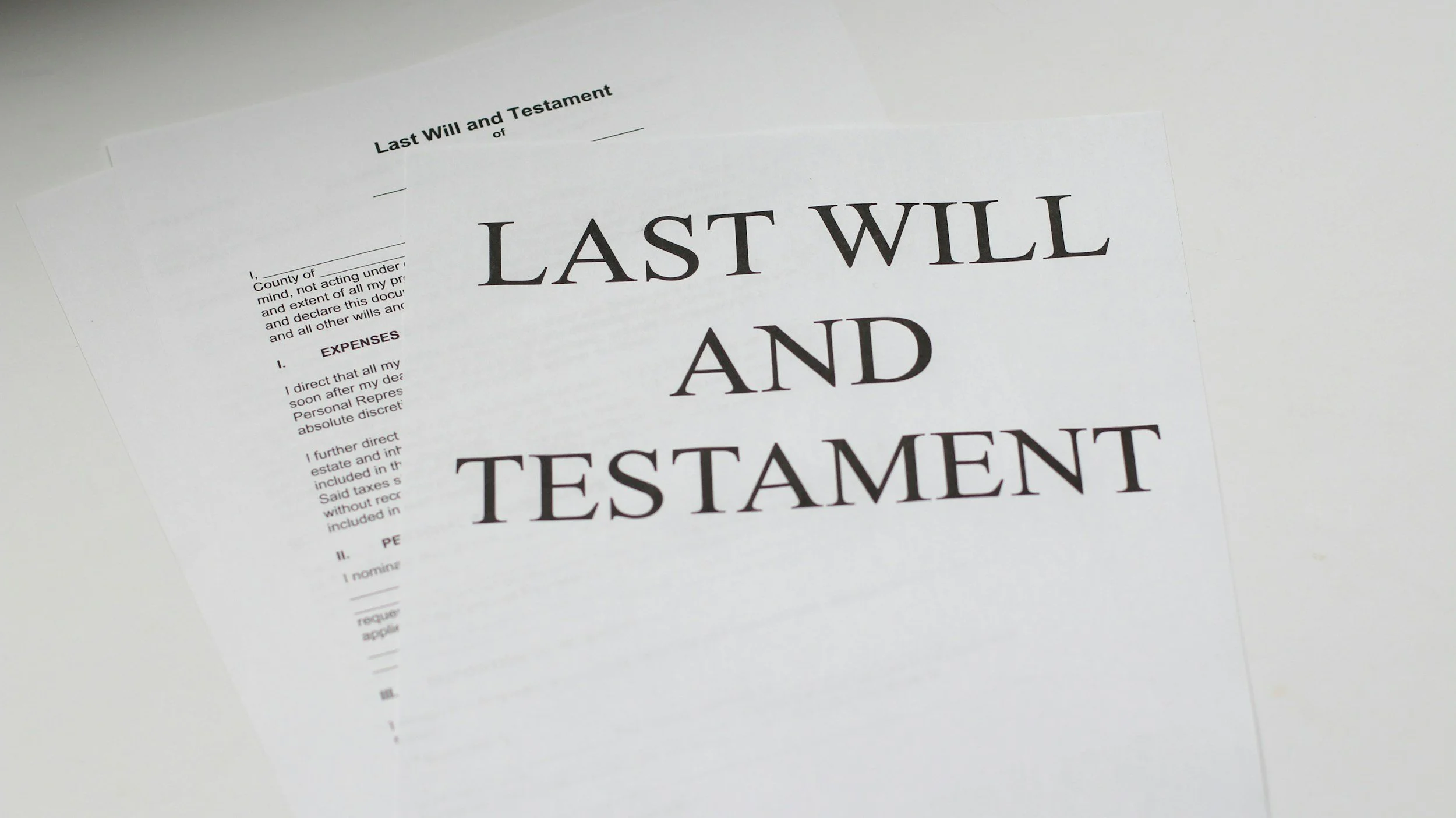
What is a Last Will and Testament?
A last will and testament is a legal document and estate planning tool, arguably the most important, used to pass on property to heirs. A last will and testament, also known as a will, typically appoints an executor of the estate, determines the distribution of the assets of the estate, provides instructions for guardianship, identifies specific gifts, and may include preferences for burial wishes.
What are the requirements for a Valid Will in Indiana?
Indiana Code section 29-1-5-1 through 29-1-5-3 generally covers the requirements to create a valid written will in Indiana. The basic requirements are as follows:
The testator (person who is executing the will) must meet the following requirements:
Must be of sound mind (also known as having “testamentary capacity”).
Must be at least eighteen (18) years of age, or a member of the armed forces.
The will itself must meet the following requirements:
Signed by the testator in the presence of two (2) disinterested witnesses
Signed by two (2) disinterested witnesses.
There several notable exceptions and rules around each of these requirements. For instance, the will itself does not necessarily need to be signed by the testator, it can be signed by an individual acting at the testator’s direction and in the testator’s presence (29-1-5-3(b)(1)(c)). Additionally, although not a requirement, a self-proving affidavit is standard practice to include with the execution of the will. Such a document shows that the will was executed in accordance with the formalities of Indiana law, which in turn can make the probate process smoother for the decedent’s heirs.
What Can Happen if a Will is Not Validly Executed?
An invalid will that was not properly executed with Indiana’s requirements can create potential problems, including:
Your estate may be treated by the court as if there were no will at all.
If this is the case, Indiana’s intestacy laws under Indiana Code section 29-1-2 would govern the disposition of your estate. This can be problematic because often the intestate order of distribution does not reflect the testator’s wishes - creating unintended beneficiaries.
Probate might be delayed.
If there is no valid will, the court may determine it needs additional evidence to determine the testator’s intent. This can slow down the process of distributing your beneficiaries estate.
Family disputes may arise.
Estates that do not have a valid will become more at-risk for potential litigation from family members challenging who is the rightful beneficiary to property of the estate. This can significantly slow down the probate process, and property may end up with individuals you did not intend to inherit.
Other documents you may need for your estate planning.
Most folks believe that their estate planning ends once they have a valid, executed will. Typically, this is not the case. Some other key documents that individuals and families may want to consider are:
A Durable Power of Attorney
A Durable Power of Attorney is a legal document that allows you to appoint a trusted person to manage your financial, legal, and personal affairs. Under Indiana code section 30-5-4, the power of attorney must be in writing, name the attorney-in-fact (the person authorized to make such decisions on your behalf), specify the powers that are being given, and be signed and notarized. The powers you may give your attorney-in-fact are quite extensive:
Health Care Advance Directive
A health care advance directive allows for an individual to appoint a health care representative to act on his or her behalf in any matter affecting health care, including consenting to health care procedures, in the event of incompetency or incapacity. The authorization must be in writing, signed, and notarized. You can include in the Health Care Advance Directive a “living will”, which is a designation of how you would like certain healthcare decisions to be made, and your representative will be bound by the instructions in the living will. Additionally, you will retain authority over health care decisions until you have been determined to be incapacitated.
Revocable Living Trust
A Revocable Living Trust is an estate‑planning tool that allows you to place your assets into a trust during your lifetime while still maintaining full control over them. In Indiana, a revocable trust is commonly used to avoid probate, keep your estate private, and ensure a smooth transition of management if you become incapacitated. Because the trust is “revocable,” you can change it, add or remove assets, or dissolve it entirely at any time. After your death, the successor trustee you choose can distribute your property quickly and privately—without court involvement.